
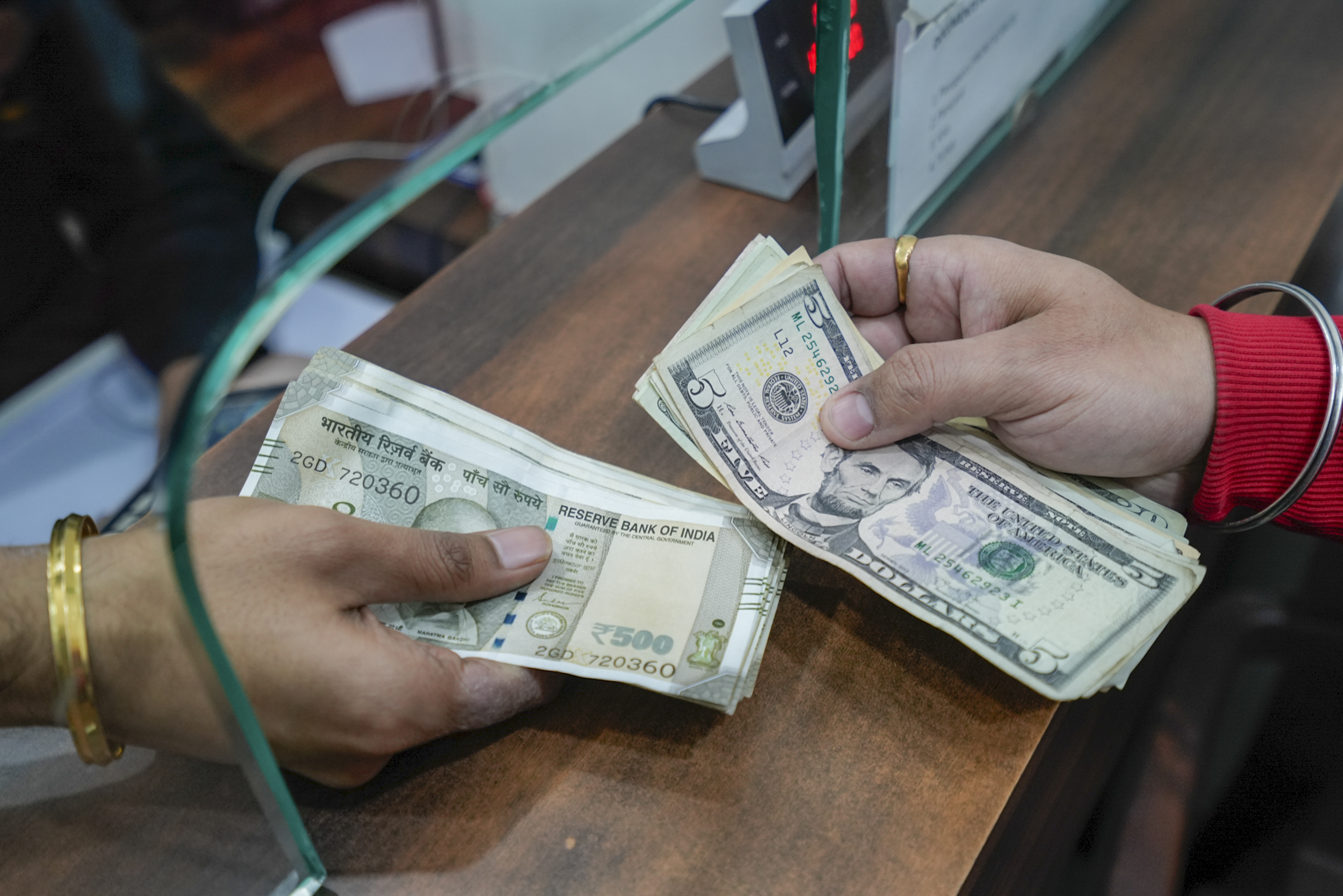
The Indian rupee slumped to a record low of Rs 89.45 against the US dollar, reflecting rising concerns over US-India trade negotiations and volatile global market conditions. Currency analysts say the slide in the rupee underscores the fragility of investor sentiment amid heightened uncertainty in global markets, with trade talks between Washington and New Delhi being closely watched by traders and businesses alike.
Factors Behind the Rupee’s Decline
Several factors contributed to the rupee’s historic drop:
-
US-India Trade Negotiations: Recent discussions between the United States and India on tariffs, market access, and trade barriers have left markets cautious. Uncertainty about potential agreements or disagreements has weighed on investor confidence, pushing the rupee lower.
-
Global Risk Sentiment: Investors remain wary due to broader global economic concerns, including inflationary pressures, interest rate decisions by the US Federal Reserve, and geopolitical tensions. In such an environment, foreign investors tend to prefer the US dollar, causing depreciation in emerging market currencies like the Indian rupee.
-
Dollar Strength: The US dollar has been strengthening globally, supported by higher interest rates and expectations of continued Fed tightening. A stronger dollar naturally exerts pressure on other currencies, including the rupee.
-
Capital Outflows: Foreign institutional investors (FIIs) often shift investments in response to trade uncertainty and global market conditions. Recent equity and debt outflows have further compounded the rupee’s weakness.
thebraindepot.com | crossfitcr.com | fastnewshub.net
zhaochulu.com | hellocarbondale.com
Impact on the Indian Economy
A depreciating rupee can have both short-term and long-term implications for the Indian economy:
-
Import Costs: As the rupee weakens, imported goods, especially crude oil, become more expensive. India, being heavily dependent on oil imports, could see higher fuel and energy costs, potentially driving inflation.
-
Corporate Margins: Companies that rely on imports for raw materials or machinery may face higher production costs, affecting profitability.
-
Exports Boost: On the positive side, a weaker rupee makes Indian exports more competitive in the global market. Sectors like IT, textiles, and pharmaceuticals could benefit from increased demand abroad.
-
Investor Sentiment: Persistent rupee weakness may deter foreign investment, as uncertainty about currency stability adds risk to cross-border investments.
Expert Analysis
Currency analysts note that while the rupee’s slide is concerning, it is influenced more by external global factors than domestic fundamentals. They argue that India’s macroeconomic indicators, including GDP growth, foreign exchange reserves, and inflation control, remain relatively stable.
However, continued trade uncertainty with the US could prolong the pressure on the rupee. Analysts recommend that businesses and investors hedge currency risks and monitor developments closely, particularly announcements from the Federal Reserve and updates on trade talks.
US-India Trade Talks in Focus
The ongoing trade discussions between Washington and New Delhi cover several key areas:
-
Tariffs and Duties: Both countries are negotiating tariffs on goods and services, aiming to reduce trade barriers while protecting domestic industries.
-
Market Access: India has sought better access for its IT services, pharmaceuticals, and agricultural exports, while the US is pushing for easier entry for its tech and manufacturing goods.
-
Intellectual Property and Data Policies: Discussions also include regulations on intellectual property rights, digital trade, and data localization, which could influence the operations of multinational companies in both countries.
Investors are closely watching these talks, as any major disagreement or delay could lead to further currency volatility. Conversely, a positive resolution may strengthen the rupee and boost investor confidence.
Global Context and Dollar Dynamics
The rupee’s decline is also part of a broader trend in emerging markets, where many currencies have weakened against the US dollar. Factors such as global interest rate differentials, geopolitical uncertainty, and capital flow shifts have contributed to this trend.
The US dollar’s strength is partly fueled by expectations of continued interest rate hikes by the Federal Reserve, as the central bank seeks to manage inflation. Emerging market currencies, including the Indian rupee, often feel the brunt of these tightening measures as capital flows toward the dollar.
Government and RBI Response
The Reserve Bank of India (RBI) typically monitors currency movements closely and may intervene to stabilize the rupee if volatility threatens financial stability. Tools such as open market operations, adjustments in interest rates, and foreign exchange reserves management can be used to mitigate extreme swings.
Additionally, the Indian government may engage in diplomatic and trade negotiations to ease bilateral trade tensions with the US, aiming to restore investor confidence and stabilize the currency.
Impact on Consumers and Businesses
For Indian consumers, a weaker rupee could translate into higher prices for imported goods, including electronics, luxury items, and fuel. Businesses that depend on imported raw materials may face increased costs, which could be passed on to consumers.
Export-oriented industries, however, may gain a competitive advantage due to a cheaper rupee, potentially increasing revenues and contributing positively to the country’s trade balance.
Outlook for the Rupee
Currency experts suggest that the rupee may remain under pressure until clear signals emerge from US-India trade talks and global markets stabilize. Key factors to watch include:
-
Federal Reserve Policies: Any indication of rate hikes or cuts could influence the strength of the dollar and, by extension, the rupee.
-
Trade Negotiation Outcomes: Positive progress in trade discussions may restore confidence, while delays or disputes could prolong volatility.
-
Global Risk Sentiment: Geopolitical tensions, oil price fluctuations, and market volatility will continue to impact emerging market currencies.
Investors and policymakers are advised to adopt a cautious approach, hedging risks where possible and closely monitoring macroeconomic indicators and trade developments.
Conclusion
The Indian rupee’s slide to a record low of Rs 89.45 underscores the delicate balance between domestic economic fundamentals and external global pressures. With US-India trade negotiations, Federal Reserve policies, and global market dynamics in play, currency volatility is likely to persist in the near term.
While a weaker rupee poses challenges, particularly for imports and inflation, it also offers opportunities for exporters and sectors benefiting from competitive pricing abroad. The Reserve Bank of India and government interventions, coupled with diplomatic engagement, will be crucial in stabilizing the currency and maintaining investor confidence.
In a complex global environment, businesses, investors, and consumers must remain vigilant, understanding both the risks and opportunities associated with currency fluctuations. As the rupee navigates these uncertain waters, clarity in trade talks and stable global conditions will be key to restoring confidence and supporting India’s economic growth.