
Pakistan is witnessing a politically sensitive moment as Prime Minister Shehbaz Sharif appears to be holding back from officially notifying Lieutenant General Asim Munir as the country’s next Chief of Defence. Security analyst Tilak Devasher has pointed out that this delay is a sign of political hesitation at the top levels of government. According to Devasher, while there is growing pressure to formalize Munir’s appointment, the Prime Minister’s cautious approach suggests a calculated move to navigate complex political and military dynamics in Islamabad.
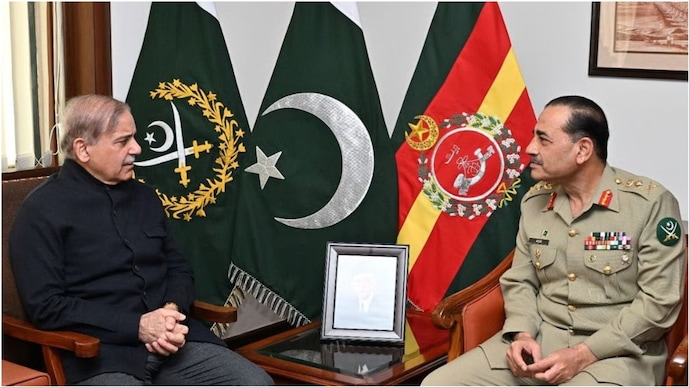
The appointment of a new Chief of Defence is always a high-stakes decision in Pakistan, a country where military influence has historically been significant in governance and political decision-making. Delays in notification can indicate not only bureaucratic procedures but also deeper political considerations, strategic calculations, and potential disagreements between the civilian government and the military establishment.
latestofnews.com | liteworkdesign.com | TechTechnoGear.info
emulinnovation.com | thebrandastute.com
Background: Asim Munir’s Rise in the Military
Lieutenant General Asim Munir is a senior and highly experienced officer in the Pakistan Army. Over the years, Munir has held various key positions, including operational and intelligence roles, which have earned him recognition as a capable and strategic military leader. His career trajectory has made him a leading contender for the country’s top military post.
The Chief of Defence position is critical for Pakistan’s national security and defense planning. The officer in this role oversees the coordination between different branches of the military and plays a crucial part in shaping defense policy. Given Pakistan’s geopolitical challenges, particularly along the borders with India and Afghanistan, the appointment carries strategic implications.
Political Context: Why the Delay Matters
Security expert Tilak Devasher suggests that Prime Minister Shehbaz Sharif’s decision to delay the formal notification of Munir’s appointment reflects political caution. In Pakistan, the military wields considerable influence, and any change at the top can have far-reaching implications. The Prime Minister’s hesitation may be aimed at balancing political stability with military expectations.
Several factors could be contributing to the delay:
-
Civil-Military Relations: Pakistan has a long history of civil-military tensions. A new military chief can shift the balance of power, and the Prime Minister may want to ensure smooth coordination and acceptance of the decision by all stakeholders.
-
Internal Political Pressures: Within the civilian government, factions may have differing views on Munir’s appointment. By delaying, the Prime Minister can manage dissent and ensure consensus.
-
External Security Concerns: Regional tensions, particularly with India and Afghanistan, may require careful timing and consideration before announcing a change in military leadership.
-
Public and International Perception: The announcement of a new defence chief is closely watched by international actors. Timing the notification to avoid misunderstandings or speculation may be part of the government’s strategy.
Tilak Devasher highlighted that the delay should not be interpreted as indecision but rather as strategic caution in a high-stakes political environment.
The Importance of Civil-Military Coordination
In Pakistan, the appointment of a new Chief of Defence is not only a military matter but also a political one. Effective coordination between the civilian government and the military is essential for national stability. Any perception of discord can have immediate consequences for domestic governance and foreign relations.
Munir’s appointment is likely to be closely scrutinized by both military insiders and political analysts. The Chief of Defence plays a vital role in policy formulation, intelligence oversight, and operational strategy. Ensuring that the new leader is accepted by the military hierarchy and is aligned with civilian objectives is crucial for maintaining a balance between governance and national security.
Tilak Devasher emphasized that the Prime Minister’s caution could be aimed at achieving a smooth transition that strengthens institutional trust, avoids internal conflicts, and preserves stability.
Regional and Strategic Implications
The timing of Asim Munir’s appointment has wider strategic implications for Pakistan. The country faces ongoing challenges along its borders, including tensions with India, developments in Afghanistan, and internal security concerns. The new Chief of Defence will play a significant role in shaping Pakistan’s military strategy and foreign policy engagement.
International actors are likely monitoring the appointment closely. Changes in military leadership can signal shifts in defense priorities, operational readiness, and strategic posture. By delaying the notification, Prime Minister Sharif may be seeking to manage perceptions both domestically and internationally, ensuring that the transition is orderly and strategically sound.
Pressure on the Government
Despite the Prime Minister’s cautious approach, there is growing pressure to formalize Munir’s appointment. Analysts suggest that delays can lead to speculation, rumors, and uncertainty, both within the military and among the public. In such a high-profile appointment, prolonged hesitation may be interpreted as political instability or indecision.
Tilak Devasher noted that the civilian government must strike a delicate balance between speed and caution. While prompt notification is necessary to maintain institutional confidence, premature action without careful consideration could create tension or controversy. The pressure reflects the importance of transparency and timing in political-military decisions.
The Role of the Media
Media coverage plays a significant role in shaping perceptions of political and military decisions in Pakistan. Delays in announcing key appointments often attract attention, leading to speculation and analysis by journalists, analysts, and commentators.
Security expert Devasher indicated that the government may also be factoring in media impact. A measured announcement, coupled with careful messaging, can help mitigate potential misunderstandings and reinforce confidence in both civilian and military institutions.
Historical Precedents
Pakistan’s history offers several examples of the complexities involved in appointing military leadership. Past transitions have sometimes been smooth, while others have been marked by tension, political maneuvering, and uncertainty. These historical lessons likely inform the Prime Minister’s current approach.
The appointment of a new Chief of Defence is not just a personnel decision; it reflects broader questions about governance, civil-military relations, and national strategy. By studying past precedents, the government can navigate the current transition with minimal disruption and maximum institutional stability.
Conclusion
The delayed notification of Lieutenant General Asim Munir as Pakistan’s Chief of Defence highlights the intersection of politics, military strategy, and national security. According to security analyst Tilak Devasher, Prime Minister Shehbaz Sharif’s hesitation indicates careful political consideration rather than indecision.
Munir’s appointment carries implications for civil-military relations, regional strategy, and internal political stability. By taking a cautious approach, the Prime Minister appears to be aiming for a smooth transition that maintains institutional trust, balances competing pressures, and ensures that Pakistan’s military leadership continues to operate effectively and coherently.
As pressure builds for formalizing the decision, the eyes of analysts, political observers, and international actors remain on Islamabad. The coming days will reveal how the government manages this sensitive appointment and whether Munir’s ascension to Chief of Defence can be achieved without controversy, ensuring both political and military stability for Pakistan.
The situation underscores the intricate and high-stakes nature of political and military leadership decisions in Pakistan, where timing, strategy, and perception play as critical a role as competence and experience.