
Before Gurgaon transformed into Gurugram, a city of glass facades, sprawling highways, and corporate towers, its landscape was defined by rivers, wetlands, and ponds. At the heart of this natural network flowed the Sahibi River—a seasonal river that once sustained farmlands, wetlands, and wildlife across Rajasthan, Haryana, and Delhi.
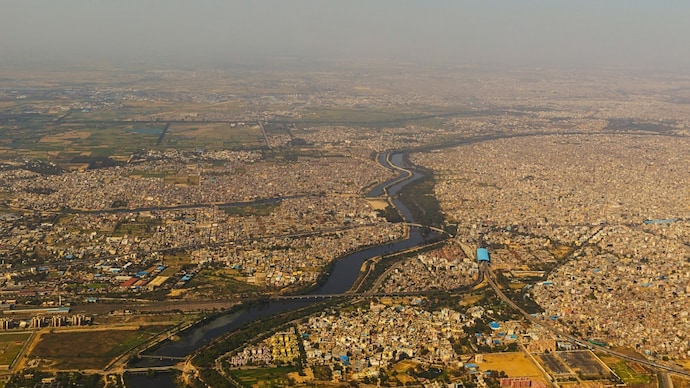
Today, the Sahibi survives only in memory. Its course through Delhi has been reduced to the Najafgarh drain, a stench-filled, black stream carrying industrial effluents and untreated sewage into the Yamuna. What was once a lifeline is now a symbol of urban neglect and ecological loss.
The Origins of the Sahibi River
The Sahibi River stretched around 300 km, originating in the dry hills of Sikar in Rajasthan. It wound through Jaipur and Alwar, entered Haryana, passed through Rewari, and brushed Gurugram’s northwestern edges before flowing into Delhi. Eventually, it merged with the Yamuna near Wazirabad, skirting the Aravalli ridge.
In ancient times, the Sahibi carried crystal-clear waters. It was used for irrigation, livestock, and even drinking. Its seasonal floods nourished wetlands and aquifers, while its basin hosted agricultural settlements and Vedic-era sites.
klokkenluideronline.in | BrankCosmetics.com | dreamvestr.com
extremesportsgoons.info | marketkingz.com
The Najafgarh Jheel: A Wetland Wonder
The Sahibi’s most important natural feature was the Najafgarh Jheel, a vast seasonal lake spread over 300 square kilometres. This wetland acted as a natural sponge, absorbing excess monsoon waters and recharging the groundwater.
It was also a biodiversity hotspot, attracting migratory birds, including the Siberian Crane, which once wintered in its marshes. Farmers, pastoralists, and fishing communities depended on it for generations.
However, a powerful Mughal-era earthquake disrupted the river’s natural flow, enlarging the Najafgarh Jheel but also reducing the Sahibi’s downstream strength.
Colonial Interventions: From River to Drain
By the 19th century, the British began altering the Sahibi’s course for agricultural expansion. In 1865, they excavated a channel downstream of Najafgarh Jheel to drain the marshes and reclaim land for cultivation. This marked the birth of what we now know as the Najafgarh drain.
At first, the drain carried clean waters. Historian Sohail Hashmi recalls that even in the 1960s, the Najafgarh was clear enough to sustain fish. But industrialisation soon changed that.
An incident from the early 1960s highlights this shift: when a vanaspati (hydrogenated oil) factory accidentally released oil into the drain near Zakhira, the water was still so clean that locals collected the solidified oil for home use. Such a scene is unimaginable today.
Urbanisation and the Decline of the Sahibi
With Gurgaon’s rapid urban growth from the 1980s onward, the Sahibi’s fate worsened. Once fed by 60 natural canals, ponds, and streams, the river system was progressively encroached, filled, or concretised.
-
Canals dwindled from 60 to just 4.
-
Wetlands and ponds were filled for real estate.
-
Low-lying catchment areas were built over, worsening floods.
Today, Gurugram experiences severe waterlogging every monsoon, as rainwater has no natural channels to drain into. Underpasses, highways, and residential colonies flood after even moderate showers because the Sahibi’s network of buffers has been obliterated.
The Sahibi Today: An “Ecologically Dead” River
The Sahibi’s two stretches in Haryana, including those along Gurugram’s northwestern boundary, are now ecologically dead. The river has turned pitch black, choked with untreated sewage and industrial effluents from factories and households across Haryana and Delhi.
As per experts:
-
Its carrying capacity has shrunk, squeezed into narrow concrete channels.
-
Its water is loaded with nitrates and phosphates, contaminating groundwater.
-
Aquatic life has collapsed, leaving it biologically lifeless.
The once vibrant river is now a toxic channel, adding to Delhi’s already grim Yamuna pollution crisis.
Hydrological Impacts: From Rivers to Floods
Gurugram’s geography naturally slopes westward, with water flowing from the Aravallis toward the Sahibi. Historically, braided streams, wetlands, and lakes absorbed excess rain, ensuring both flood control and groundwater recharge.
But with unchecked construction:
-
Drainage buffers disappeared.
-
Concrete replaced soil.
-
Rainwater now accumulates on roads and underpasses.
Ironically, while Gurugram floods during monsoons, it also suffers severe groundwater decline year-round. The destruction of the Sahibi and its wetlands lies at the heart of this contradiction.
A River of Memory and History
The Sahibi River is not just an ecological story—it is also a cultural memory. Archaeological findings connect its basin to Vedic settlements, suggesting that communities thrived along its seasonal waters thousands of years ago.
Even within living memory, it supported fishing, agriculture, and wildlife. Migratory birds like the Siberian Crane were once regular visitors, but their absence today reflects the collapse of the river’s ecosystem.
For locals, especially older generations, the Sahibi represents both nostalgia and loss—a reminder of a time when Gurugram was not only fertile farmland but also closely tied to its natural water systems.
What Can Be Done? Restoring Sahibi’s Legacy
While the Sahibi cannot return to its past glory as a free-flowing river, its catchments and wetlands can still be revived. Experts suggest:
-
Restoring natural drains and ponds to act as sponges for monsoon water.
-
Treating sewage and industrial waste before release into the river.
-
Reclaiming parts of the Najafgarh Jheel as a floodplain buffer.
-
Reviving Gurugram’s lakes like Basai and Ghata to store rainwater.
-
Public awareness and heritage recognition of the Sahibi’s cultural value.
Cities around the world—from London’s Thames tributaries to Seoul’s Cheonggyecheon stream—have successfully revived lost rivers. With planning and commitment, Gurugram too can bring parts of Sahibi’s legacy back.
Conclusion: Lessons from a Lost River
The story of the Sahibi River is the story of Gurugram itself—a shift from landscapes of water and wetlands to landscapes of concrete and drains. What was once a lifeline is now reduced to a polluted nala, barely acknowledged by the city that rose on its banks.
Yet, the Sahibi’s history reminds us that nature cannot be ignored without consequences. Gurugram’s floods, water scarcity, and groundwater decline are directly linked to its neglect of rivers and wetlands.
If Gurugram hopes to withstand future monsoons, climate change, and its growing population, it must reconnect with its hydrological roots. The Sahibi River may never return as it once was, but its revival as a functional ecological system could help heal the city’s fractured relationship with water.
In remembering Sahibi, Gurugram remembers itself—not just as a city of glass towers, but as a land once shaped and sustained by flowing rivers.