
The latest G20 Declaration reinforces a powerful and timely message: no nation should use the threat or use of force to pursue territorial expansion. This statement, emerging amid increasing geopolitical tensions, reflects a shared global concern over the erosion of peace, the rise of aggressive posturing, and the widening gap in equitable development. The declaration places strong emphasis on safeguarding sovereignty, promoting peaceful coexistence, and ensuring that economic competition does not spill into coercion or conflict.
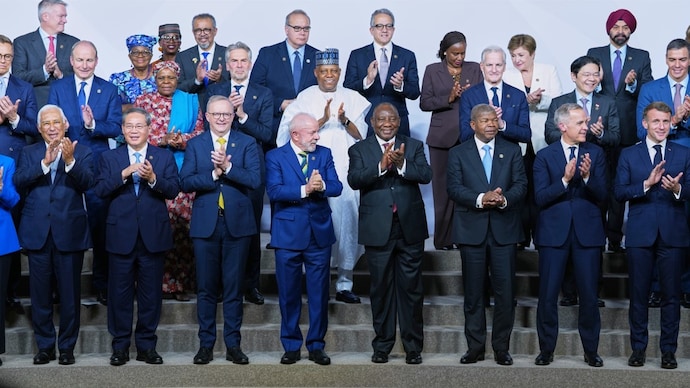
Beyond geopolitical stability, the declaration also draws attention to worrying global trends—rising geo-economic competition, instability across regions, and growing inequality. These challenges, the leaders warn, could threaten inclusive growth and undermine the progress made in recent decades. In a world where conflicts, economic disparities, and ideological polarization are expanding, the G20’s message acts as both a warning and a call for collective action.
A Strong Stand Against Territorial Aggression
Territorial disputes are not new, but in recent years, global tensions have grown sharper. The G20’s clear assertion that nations must not use military force or coercive threats to alter borders is significant for several reasons.
First, it attempts to reinforce the principles of the UN Charter, reminding member countries that sovereignty and territorial integrity are non-negotiable foundations of international order. In many regions, traditional diplomatic mechanisms have struggled to keep up with rapidly escalating disputes. By reaffirming these principles, the G20 seeks to re-establish a global consensus that territorial aggression—whether through military invasions, proxy wars, border incursions, or economic coercion—must be collectively opposed.
Second, this message is also directed at the rising trend of hybrid warfare. Territorial expansion today need not always be achieved through direct military confrontation. It may occur through cyber intrusions, economic pressure, misinformation campaigns, grey-zone activities, or attempts to weaken smaller nations from within. The declaration broadly addresses these concerns, urging nations to refrain from any actions that undermine peace.
Third, the statement also underscores the importance of diplomacy. At a time when negotiations are increasingly replaced by confrontation, the G20’s message encourages a return to dialogue and peaceful resolution of disputes. This reminder comes at a crucial moment when multiple regions face heightened tensions—from border conflicts to maritime disputes and ideological rivalry.
harleyhaze.com | creepersaustralia.com | Cyberdatatech.com
onlinecasinosdata.com | followthelaws.com
Geo-Economic Competition and Its Risks
Another major concern the declaration highlights is the rise in geo-economic competition. As nations compete fiercely for access to resources, technology leadership, supply chain dominance, and strategic alliances, the economic battlefield has become increasingly volatile.
While healthy competition can drive innovation and growth, unchecked geo-economic rivalry can have destabilizing consequences. Countries may impose severe trade restrictions, initiate sanctions, weaponize supply chains, or manipulate access to critical technologies in ways that disrupt global markets.
The declaration notes that such rivalry, if left unmanaged, can harm developing nations most severely. Many poorer economies depend heavily on stable global markets, predictable trade flows, and international partnerships. Geo-economic shifts—like supply chain diversification or export controls—can push them into economic uncertainty.
The G20 urges member states to balance competition with cooperation. The goal, leaders insist, should be to foster fair economic practices, encourage innovation, and promote sustainable development—not to undermine one another’s growth.
Global Instability: A Growing Concern
The declaration also outlines rising global instability as a major threat. Instability stems from multiple interconnected factors:
-
Regional conflicts
-
Political polarization
-
Cyber threats
-
Climate-induced disasters
-
Economic downturns
-
Resource scarcity
-
Refugee crises
Each of these creates ripple effects across borders. For instance, conflict in one region can disrupt global supply chains. Cyberattacks on critical infrastructure in one nation can have consequences for multinational companies worldwide. Climate-driven disasters can trigger migration patterns that reshape geopolitical landscapes.
G20 leaders acknowledge that dealing with instability requires cooperation, not isolation. The declaration emphasizes strengthening multilateral institutions, improving early-warning systems, and building resilient global frameworks to manage crises more effectively.
Widening Inequality and Its Impact on Growth
Perhaps the most urgent issue highlighted is widening inequality. The declaration notes that inequality—whether economic, social, or digital—is becoming a defining challenge of our times.
Even as some nations recover from global economic shocks, others struggle with rising poverty, unemployment, inflation, and shrinking opportunities. The digital divide has grown deeper, leaving millions out of modern economic systems. Wealth concentration has intensified, and emerging economies face higher debt burdens than ever before.
The G20 expresses concern that such inequality can slow global growth, create social unrest, and weaken economic resilience. Inclusive growth must therefore be prioritized, with special focus on:
-
Access to education and digital tools
-
Gender equality
-
Employment generation
-
Affordable healthcare
-
Sustainable development
-
Fair trade opportunities
The declaration argues that only by addressing inequality directly can global economic systems remain stable and sustainable in the long run.
A Call for Collective Responsibility
The G20’s message is clear: global challenges are interconnected, and so must be the solutions.
The declaration encourages nations to adopt a cooperative approach to solving shared problems. It highlights several fundamental principles:
1. Respect for Sovereignty
Every nation, big or small, must be able to protect its borders and identity without fear of coercion or attack.
2. Peaceful Resolution of Disputes
Dialogue, diplomacy, and multilateralism remain vital tools for resolving geopolitical tensions.
3. Inclusive Economic Growth
Development must benefit all nations and communities, not just the wealthy.
4. Global Stability as a Shared Goal
No single nation can thrive in a world beset by widespread instability.
5. Strengthened Multilateral Institutions
International organizations must be empowered to mediate conflicts, manage crises, and coordinate development efforts.
Conclusion: A Timely Reminder for the World
As geopolitical tensions rise and global economic conditions become more uncertain, the G20 Declaration’s message could not have come at a more crucial time. The reaffirmation that no nation should use threat or force for territorial expansion serves as a reminder of the values that uphold global peace.
Similarly, the concerns about instability, inequality, and geo-economic competition highlight the need for cooperation instead of confrontation. The declaration calls upon all nations to balance power with responsibility, ambition with fairness, and competition with collaboration.
If the world is to move toward sustainable peace and inclusive growth, leaders must translate these principles into real action. The G20 Declaration provides the foundation—what remains is for every nation to uphold it.